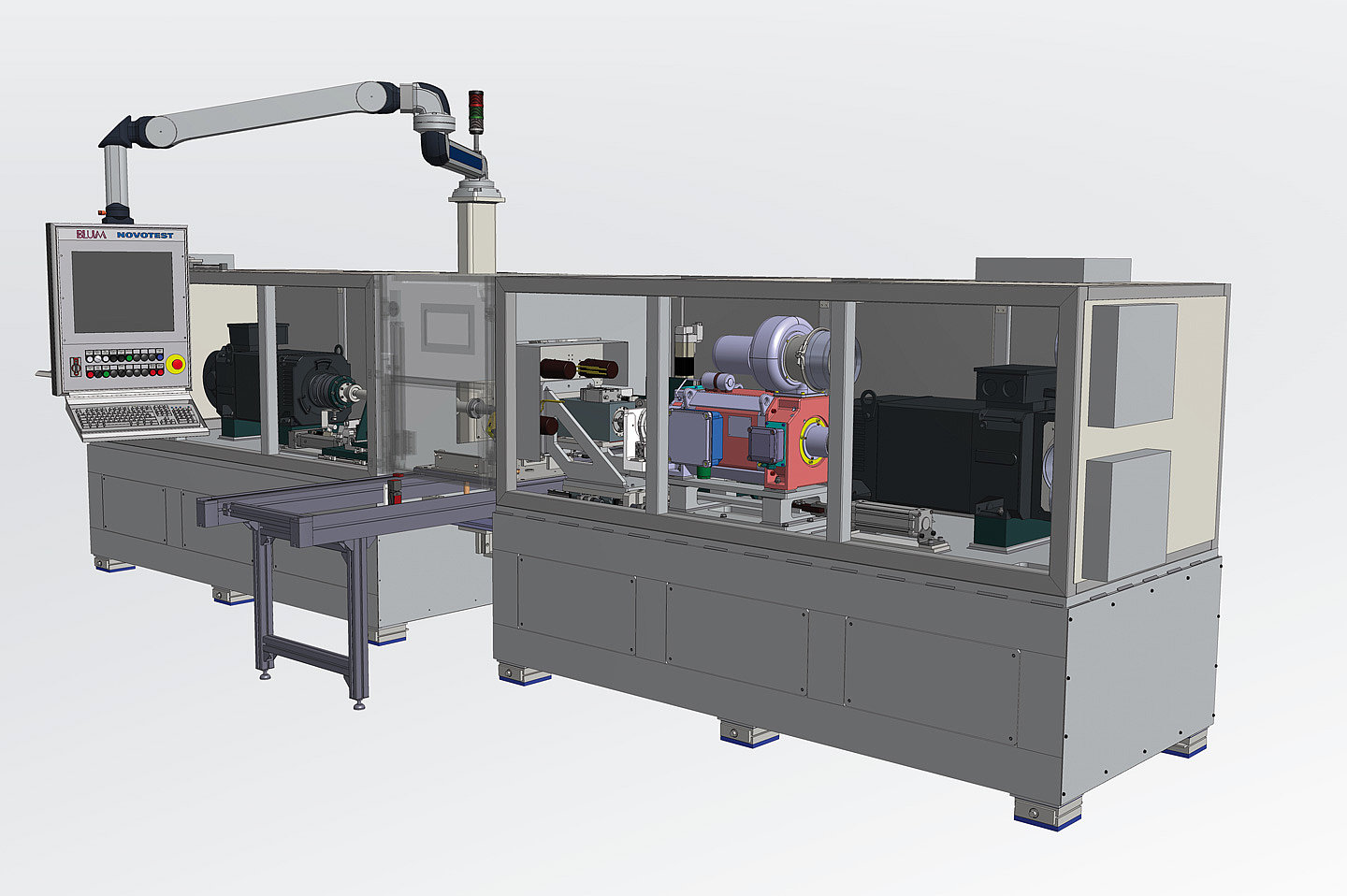
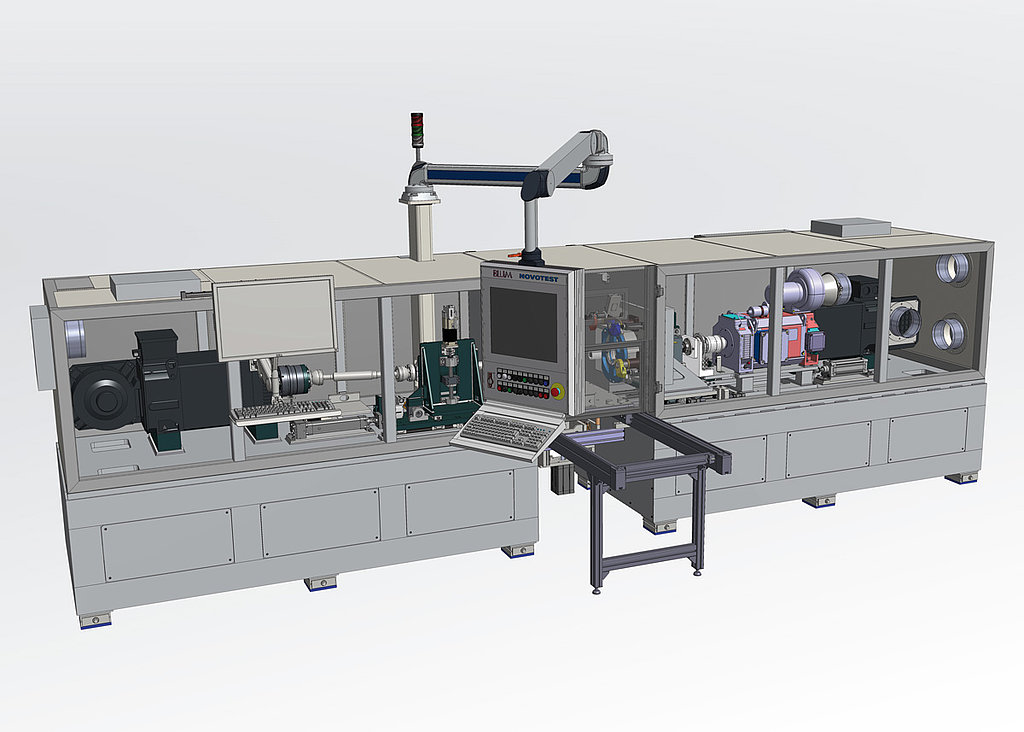
- Highlights
- Features
- Technical data
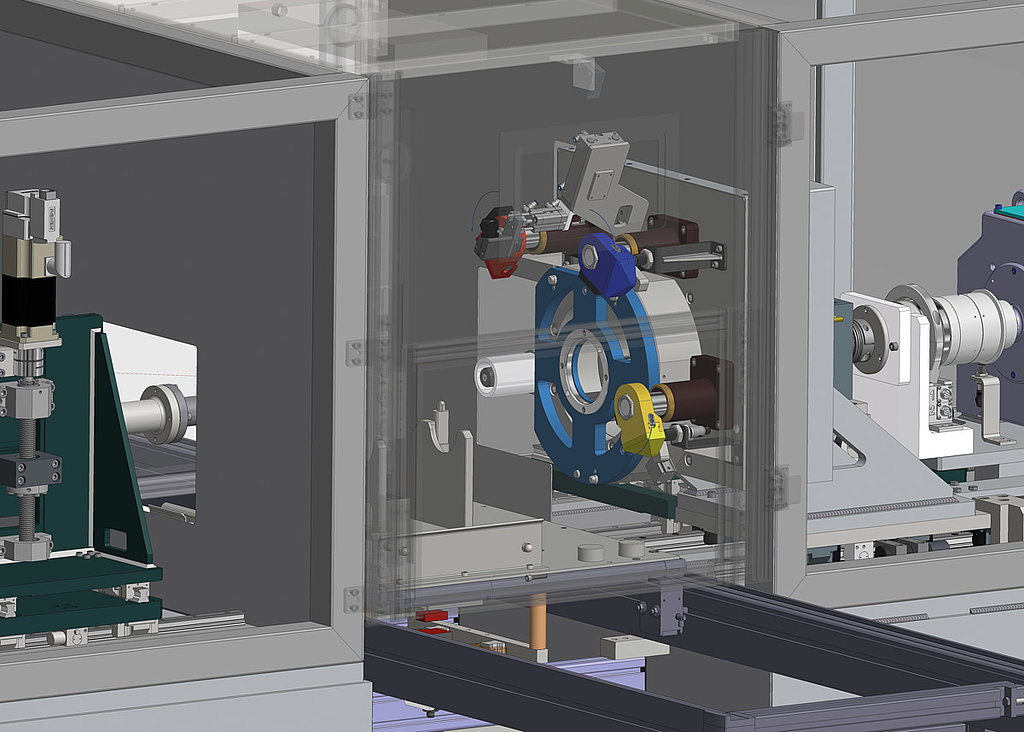
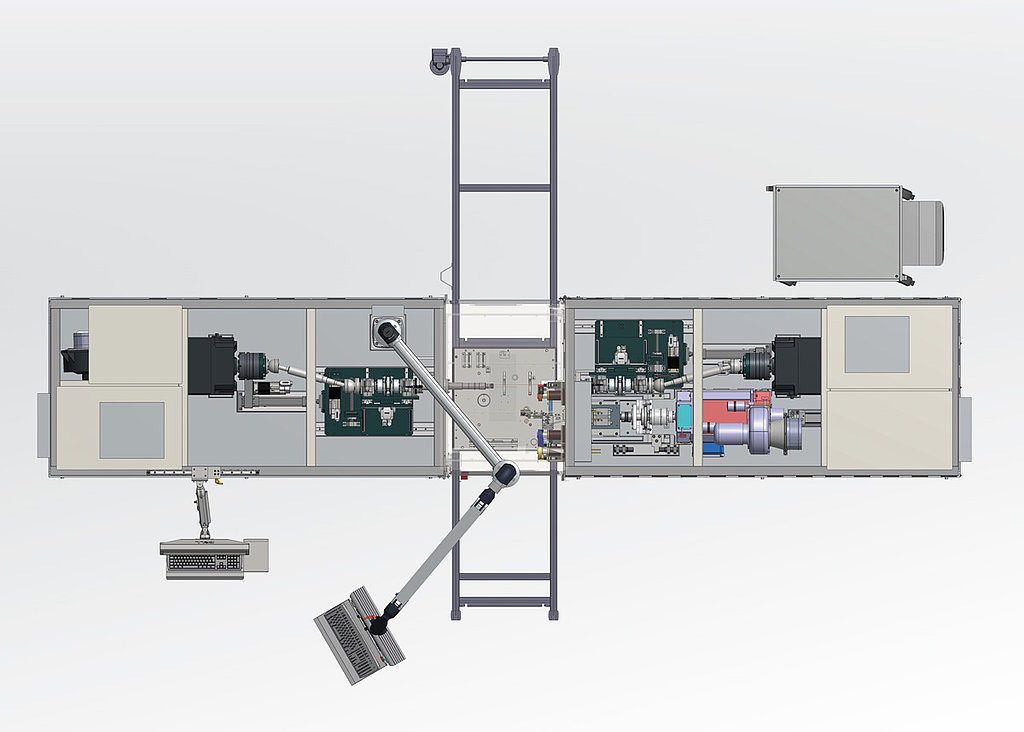
| Type | Test stand for series production with 3 engines |
| Specimens | E-Drive transmissions |
| Test procedures | Operation test |
| Noise test | |
| Parking lock | |
| Input | Shaft power 35.6 kW |
| Rotation speed max. 9000 rpm | |
| Drive torque max. 170 Nm | |
| Output | Shaft power 30.5 kW |
| Rotation speed max. 3600 rpm | |
| Drive torque max. 750 Nm | |
| Number | 1 test stand |
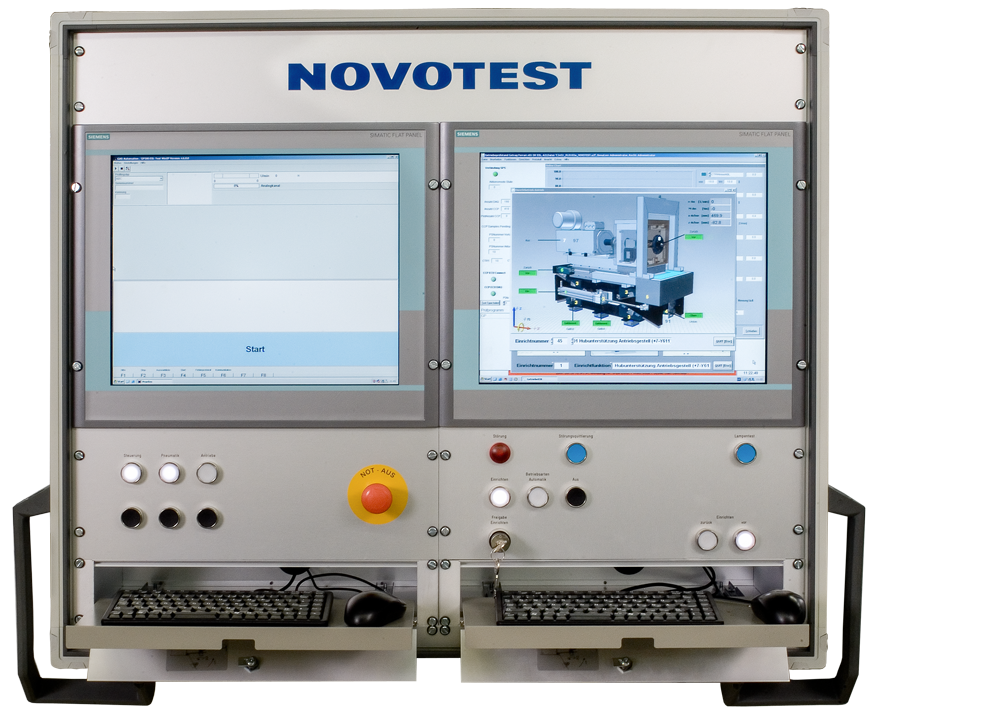
The NovoPS test stand software is a Windows-based solution that is programmed in-house and optimised for the respective test task. As the interface to the user, the uncomplicated user interface provides intuitive access to all functions of the test stand. Moreover, both the connection of the test stand to the customer's conveyor systems as well as its integration into the existing network environment is taken into account. This enables the data acquired to be processed and evaluated independently of the test stand.
Data recording
- Analogue data
- Digital data (SSI etc.)
- CAN data (with synchronisation to analogue data)
Data storage
- Data export as a text file (.csv), DIADEM file
- Database connection ODBC, MS Access, SQL Server
Creating and editing test programs
- Generation or import of test program data records
- Editing program sequences
- Evaluation within the sequences
- Free adaptation of test sequences
- On-line graphic of recorded data